
The 5 Most Common Industrial AI Use Cases

Where AI Is Delivering Real Value in Manufacturing Today
Where exactly is AI delivering real value in manufacturing and industrial operations? With all the hype surrounding artificial intelligence, it can be difficult to separate genuine production deployments from proof-of-concept experiments that never scale.
The reality is that certain industrial AI applications have matured significantly. Leading manufacturers are running AI systems in production environments, not as experiments, but as core operational infrastructure. This article breaks down the five most common industrial AI use cases, illustrated with real-world patterns and practical insights for manufacturing leaders evaluating AI investments.
1. Industrial AI in Quality and Inspection
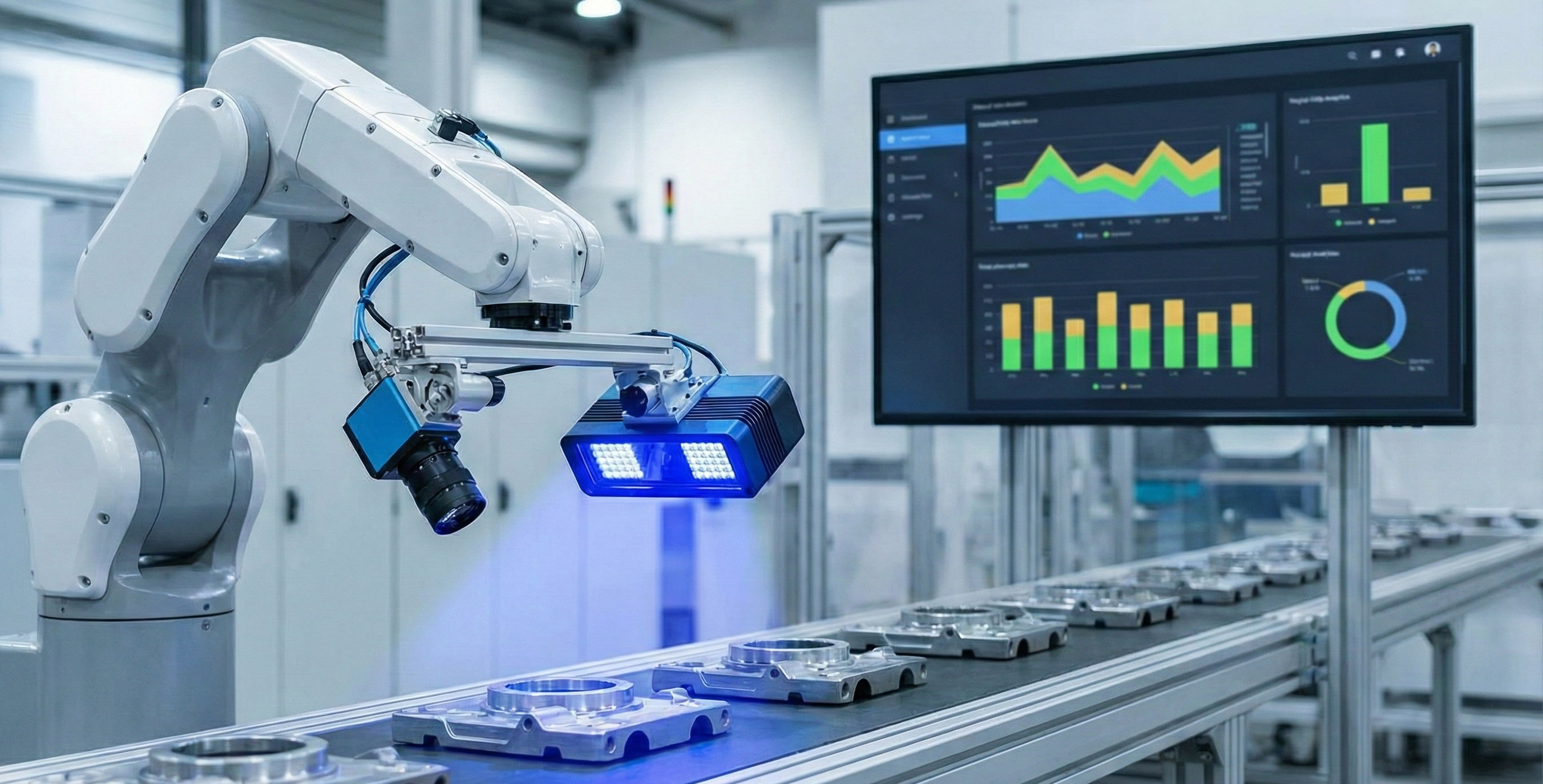
Quality and inspection is arguably the most mature industrial AI application area. Computer vision for defect detection has moved well beyond experimentation, it's now a proven technology with established vendors, proven ROI models, and high deployment success rates. If you're looking for industrial AI with the clearest path to production, this is where to start.
What it Includes
Automated optical inspection (AOI): Camera-based defect detection using deep learning and computer vision.
Predictive quality simulation: Forecasting quality outcomes before production completes based on process parameters
Intelligent data usage: Mining historical quality data to identify correlations and root causes
Automated non-optical fault detection: Using sensors beyond cameras (vibration, acoustic, thermal) to identify defects
Example Applications
Deep Learning for Visual Inspection
In sectors where inspection thoroughness is critical and surfaces are enormous, deep learning-based visual inspection systems have proven transformative. These AI systems identify surface defects, corrosion, and structural anomalies that human inspectors might miss, while dramatically reducing inspection time for large surfaces. The combination of accuracy and speed has revolutionized quality control in manufacturing.
GPU-Accelerated Optical Inspection for Electronics
There have been impressive deployments of GPU-powered AI systems for factory automation. Using simulation platforms, manufacturers optimize mobile robots and pick-and-place robotic arms. Automated Optical Inspection systems use deep learning to detect defects in parts like printed circuit boards, significantly reducing the false positive rates that plagued traditional rule-based systems.
AI-Powered Quality Sorting in Food Processing
Quality inspection AI extends well beyond electronics into food processing and other industries with high-volume visual sorting requirements. AI-driven optical sorting technology enhances product quality by identifying and removing defective items at high speed. This demonstrates the broad applicability of computer vision across diverse manufacturing sectors.
Implementation Considerations
Quality inspection has the highest deployment success rate among major industrial AI categories. Machine learning, particularly deep learning for image analysis, is used in the majority of implementations. The dual benefit of quality improvement and cost reduction makes this category attractive for ROI calculations. Key success factors include having sufficient labeled training data, consistent lighting and imaging conditions, and clear defect taxonomies.
2. Industrial AI in Production Operations
Production operations represents the largest category of industrial AI implementations. These applications focus on optimizing manufacturing processes, enabling autonomous robotics, and improving production planning. The appeal is obvious: even small percentage improvements in production efficiency translate to significant bottom-line impact at scale.
What It Includes
Production optimization: AI algorithms that fine-tune process parameters in real-time to maximize throughput and minimize waste.
Autonomous machines and robots: Self-guided systems for material handling, assembly, and repetitive manufacturing tasks.
Controller setpoint optimization: AI-driven adjustments to PLC and DCS settings for optimal process control.
Autonomous production control: End-to-end AI management of entire production processes with minimal human intervention.
Example Applications
Natural Language Interfaces for Production Engineering
Manufacturers are integrating large language models into their digital production ecosystems to improve real-time process and error analysis. Production engineers now use natural language queries to diagnose issues, identify error patterns, and receive quality management recommendations. This approach empowers frontline workers with AI-assisted troubleshooting capabilities that previously required specialized data science expertise.
Reinforcement Learning for Plant Control
Some of the most advanced applications of AI in continuous process industries involve reinforcement learning systems that autonomously control plant operations for extended periods. These AI models operate successfully across seasonal changes and maintenance periods, demonstrating true autonomous control rather than just advisory systems. This represents a significant leap forward in process automation sophistication.
Implementation Considerations
Production operations AI typically requires significant integration effort with existing automation systems. Machine learning dominates as the primary AI method, though reinforcement learning is emerging for advanced autonomous control applications. The primary value drivers are production quality improvement and cost reduction. Organizations should expect longer deployment timelines compared to other use cases. However, the complexity of optimizing core manufacturing processes means more projects remain in pilot phases.
3. Industrial AI in Smart Maintenance and Service
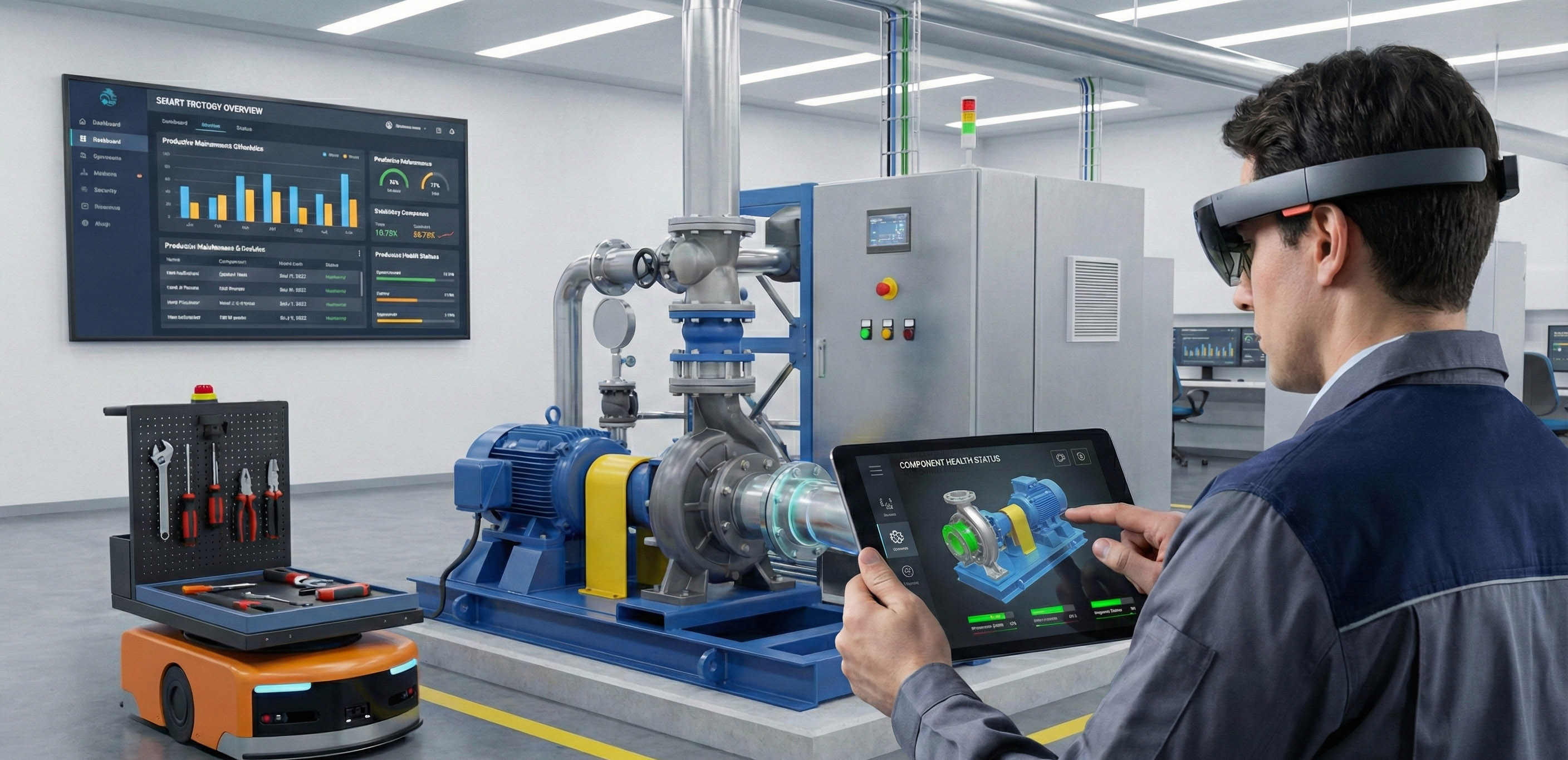
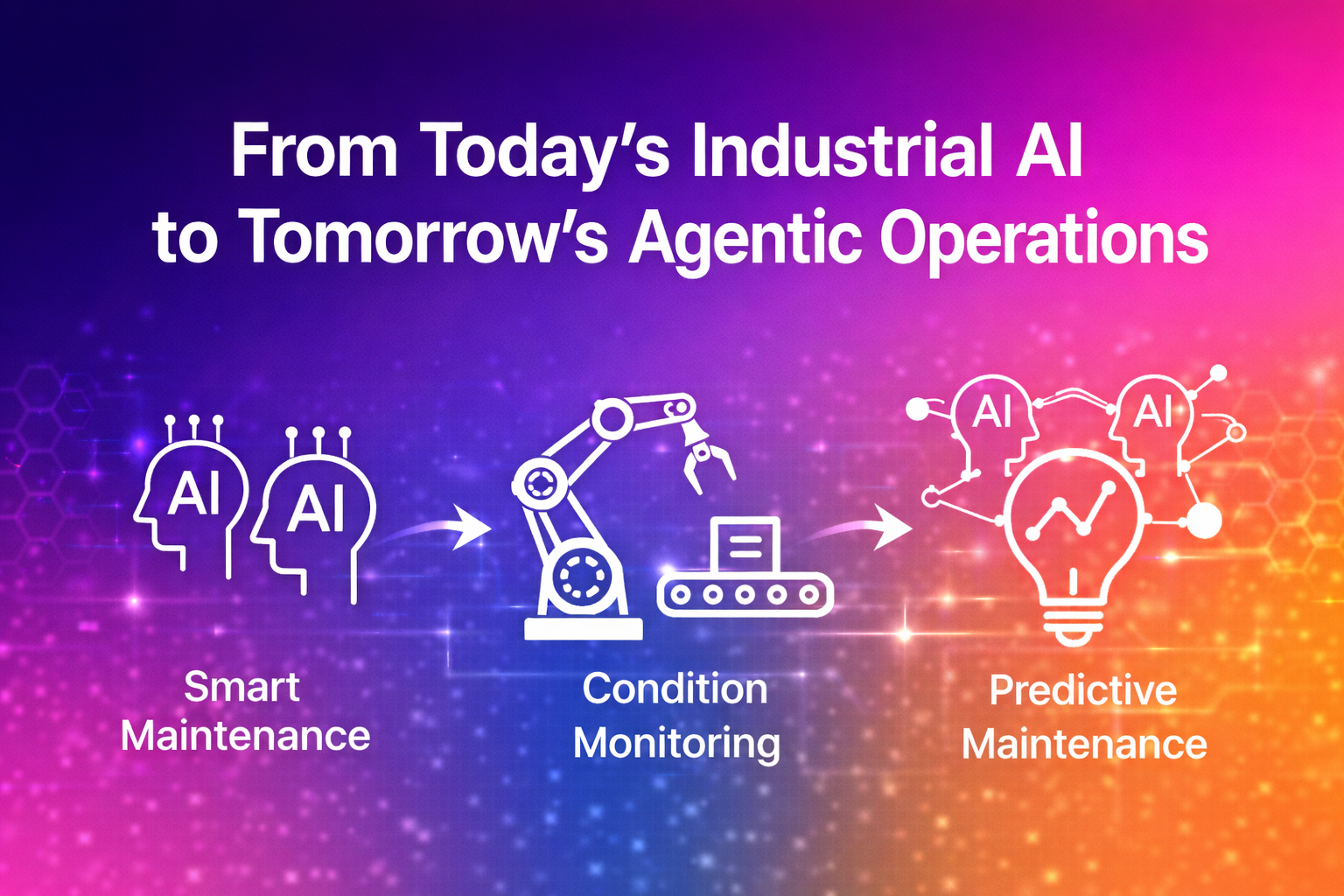
Predictive maintenance has been a flagship AI use case in manufacturing for nearly a decade, and for good reason, the ROI case is compelling and relatively straightforward to calculate. What's evolved is the sophistication: modern implementations combine equipment monitoring with Generative AI-powered service assistants that can interpret manuals, guide technicians, and predict part requirements.
What It Includes
Service chatbots and assistants: AI assistants for maintenance guidance, troubleshooting, and procedure lookup
Predictive maintenance of systems and plants: Holistic equipment health monitoring across entire production lines
Predictive maintenance of single assets: Focused monitoring of individual critical equipment
Field service optimization: AI-driven technician routing, scheduling, and task assignment
Example Applications
Predictive Maintenance in Food Manufacturing
Food manufacturers facing challenges with unplanned production line stops are successfully deploying predictive maintenance systems that shift them from reactive to proactive maintenance. The AI monitors vibration signatures across production equipment, alerting maintenance teams to emerging issues before they cause failures. This results in fewer emergency repairs, better planned maintenance windows, and improved overall equipment effectiveness (OEE).
GenAI-Powered Industrial Co-Pilots
The convergence of predictive maintenance with generative AI has introduced industrial copilots, AI-powered assistants integrated directly into production machinery. These systems use generative AI to help engineers generate PLC code through natural language input and provide maintenance guidance by interpreting technical documentation. This represents not just predicting failures, but actively assisting in resolution.
Implementation Considerations
The primary value driver for smart maintenance is cost reduction, making it perhaps the clearest ROI story in industrial AI. Generative AI has made significant inroads here, particularly for service chatbots and maintenance assistants. Key success factors include having historical failure data, appropriate sensor infrastructure, and integration with CMMS/EAM systems.
4. Industrial AI in Logistics and Supply Chain
Logistics and supply chain optimization has emerged as a high-impact AI application area, driven by e-commerce growth, supply chain volatility, and the need for greater operational agility. Applications range from warehouse automation to demand forecasting, with notable involvement from logistics leaders who are setting new industry standards.
What It Includes
Predictive inventory management: AI-driven demand forecasting and stock optimization
Route optimization and scheduling: Intelligent logistics planning for transportation and delivery
Warehouse automation: AI-optimized storage, picking, and packing systems
Autonomous logistics systems: Self-navigating AGVs (Automated Guided Vehicles) and AMRs (Autonomous Mobile Robots)
Example Applications
AI-Powered Warehouse Automation at Scale
Industrial leaders have deployed advanced robotics systems that leverage machine learning and deep learning to automate picking and packing processes. These systems use AI to control inventory identification and movement, while robotic systems navigate warehouse floors autonomously.
GPU-Enabled Autonomous Guided Vehicles in Manufacturing
In automotive manufacturing, AI-enabled autonomous guided vehicles are being deployed to handle complex navigation through dynamic factory environments. These AGVs optimize material flow between production stations in real-time. Unlike fixed conveyor systems, AI-powered AGVs can adapt routes based on production needs and floor conditions, providing unprecedented flexibility in material handling.
Implementation Considerations
Unlike other categories focused primarily on cost reduction, logistics AI often drives revenue growth through faster fulfillment and improved service levels. Machine learning and deep learning dominate the technical approaches, particularly for navigation and vision systems. Key success factors include accurate inventory data, appropriate physical infrastructure, and safety systems for human-robot collaboration.
5. Industrial AI in IT Security and Data Protection
Often overlooked in industrial AI discussions, cybersecurity represents a critical and growing application area. As manufacturing becomes more connected through IIoT, the attack surface expands dramatically. Traditional IT security tools struggle with the unique protocols and traffic patterns of operational technology networks, AI-powered threat detection fills this gap.
What It Includes
Cybersecurity threat detection: AI that identifies anomalous network behavior indicative of attacks.
Threat detection and response: Automated incident response and remediation
OT network monitoring: Specialized monitoring for industrial control systems and SCADA networks
Example Applications
AI-Powered Cybersecurity for OT Networks
Many manufacturers are deploying AI-powered cybersecurity platforms to protect their OT networks. These systems use unsupervised machine learning to establish baseline behavior for industrial control systems, then detect and respond to deviations that may indicate cyber threats. This approach is particularly valuable in manufacturing environments where signature-based security tools fail to recognize the specialized protocols (Modbus, OPC UA, EtherNet/IP) that comprise legitimate industrial traffic.
Implementation Considerations
The primary value driver is safety and security rather than direct cost savings, though avoiding a major cyber incident certainly has financial implications. Key success factors include network visibility across IT/OT boundaries, understanding of legitimate operational patterns, and integration with security operations workflows.
Conclusion
The common thread across all five use cases is a foundation of machine learning applied to well-defined problems with clear data sources.
For organizations beginning their industrial AI journey, the path forward is clear: identify specific operational problems where AI has proven value, ensure robust data infrastructure to support these applications, and work with vendors who have demonstrated success in similar deployments. Industrial AI has moved decisively from experimentation to production, the question is no longer whether to invest, but where to start.
Get the newsletter
Industrial data & AI architecture guides, implementation tutorials and use-case blueprints, delivered as they’re published.
More articles
All articles →

The leading IIoT & AI educational platform for digital manufacturing teams