
Pharma's Path to AI-Driven Manufacturing

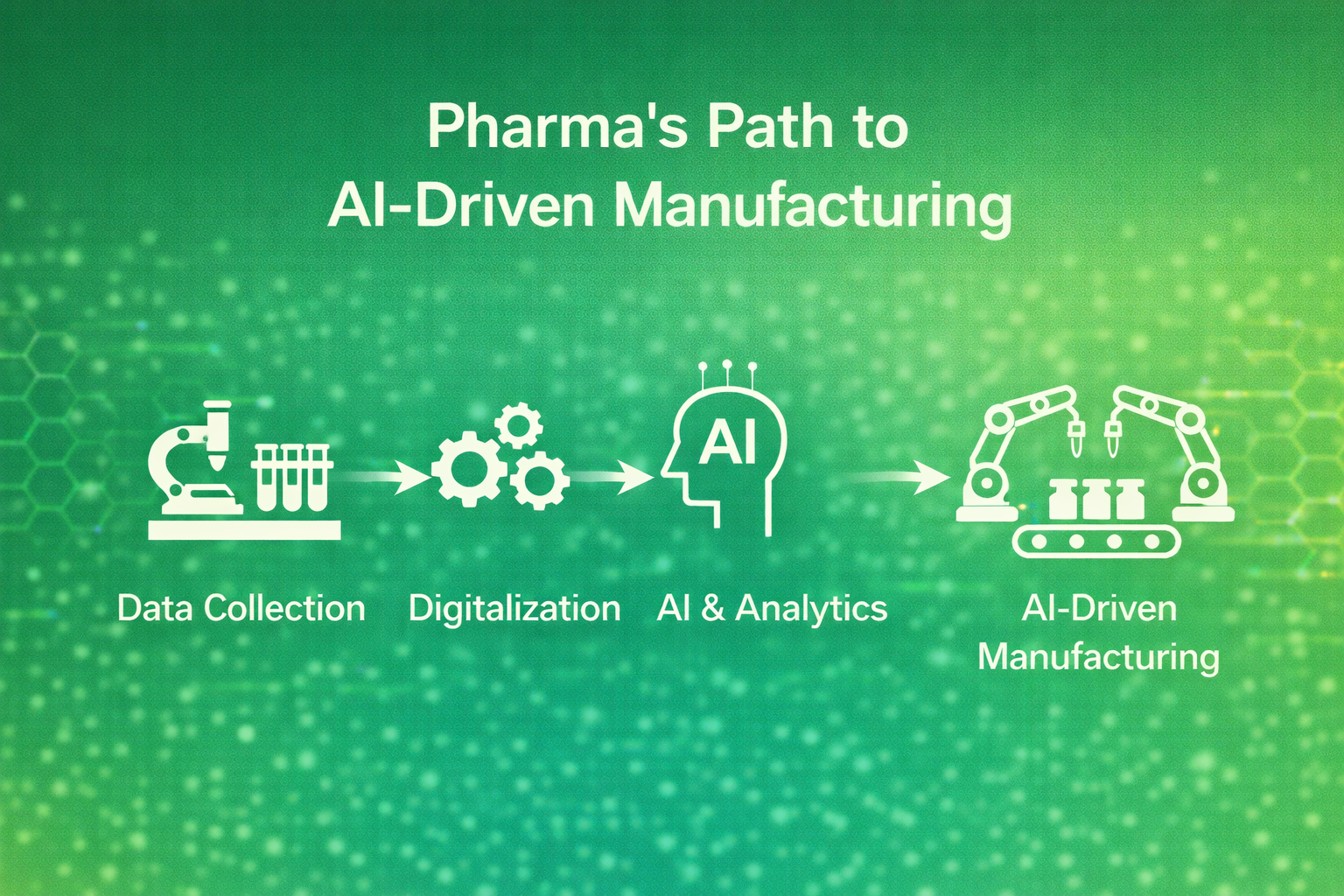
How Pharmaceutical Manufacturers Are Navigating the Unique Challenges of Industrial AI
Pharmaceutical manufacturing operates under constraints that most industries don't face. Every process change requires validation. Every algorithm touching production needs regulatory justification. The cost of quality failures isn't just customer complaints, it's patient safety, FDA warning letters, and consent decrees that can shut down operations.
Yet despite these constraints, or perhaps because of them, pharmaceutical manufacturers are finding that AI delivers exceptional value. Quality is paramount, and AI excels at quality applications. Documentation requirements are extensive, and AI can automate documentation. The cost of failures is high, and AI predicts and prevents failures.
Examining how leading pharmaceutical and life science companies are actually deploying AI reveals a clear pattern: they're not trying to revolutionize manufacturing overnight. They're strategically targeting applications where AI's strengths align with pharma's unique requirements, and where regulatory acceptance is achievable.
The Pharma AI Paradox
There's a paradox in pharmaceutical AI adoption: the industry that should benefit most from AI's quality and consistency capabilities has been among the slowest to adopt it. The reasons are structural, not technological.
The Validation Challenge
In most industries, deploying AI means proving it works better than the alternative. In pharma, that's table stakes. You also need to prove it will continue to work the same way, that you can explain how it works, that any changes are controlled and documented, and that you can demonstrate all of this to regulators during inspections.
This isn't bureaucratic overhead, it's the foundation of drug safety. But it creates genuine challenges for AI deployment. Machine learning models that update continuously don't fit neatly into change control frameworks. Neural networks that can't fully explain their decisions don't align with requirements for process understanding.
The Quality Opportunity
But the same regulatory framework that creates challenges also creates opportunity. Pharmaceutical manufacturing generates enormous amounts of data, process parameters, environmental conditions, in-process measurements, final quality tests, all rigorously documented. This data infrastructure, built for compliance, is exactly what AI needs to function.
Where Pharma AI Is Working Today
Pharmaceutical companies are focusing AI investments in four areas that align with both business value and regulatory feasibility: quality inspection, supply chain optimization, R&D acceleration, and operational efficiency.
Quality Inspection: The Natural Starting Point
AI/ML-Driven Drug Inspection
Leading pharmaceutical manufacturers are implementing comprehensive AI systems that represent some of the most advanced pharmaceutical AI in production. These systems harmonize data from multiple sources: product genealogy, process parameters, and quality measurements from existing manufacturing systems, plus real-time data from inspection machines.
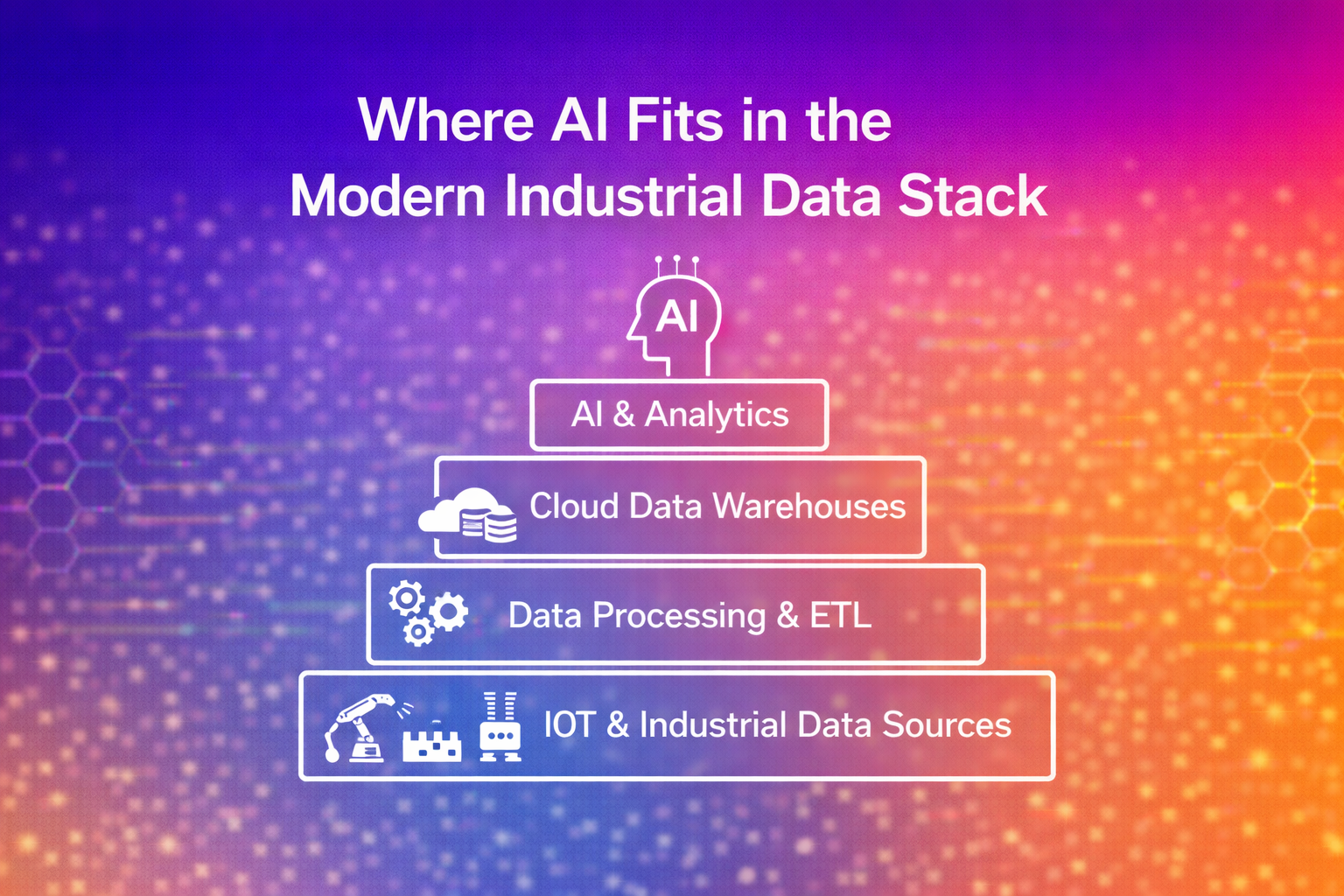
The technical architecture is notable: cloud data transformation and streaming services handle real-time data flow; data warehouse platforms provide analytics; machine learning platforms host deep learning models for image classification; NoSQL databases store inferences for consumption by downstream applications. Deep learning models classify defect images at scale, the kind of visual inspection task where AI consistently outperforms human inspection.
GenAI for SOP-Guided Manufacturing
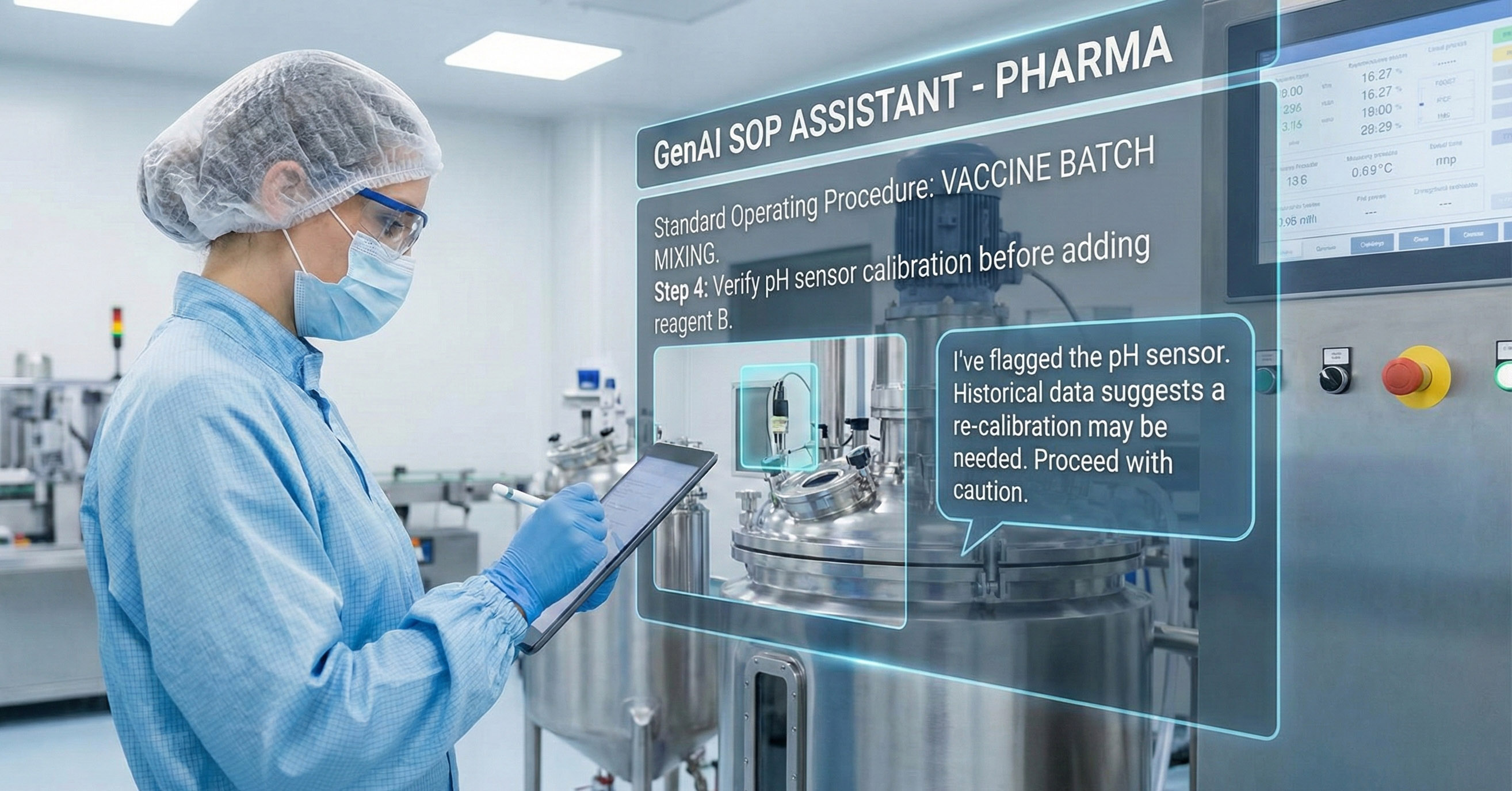
Capsule and pharmaceutical packaging manufacturers are implementing Generative AI systems to make existing quality knowledge more accessible. These systems are trained on 200+ SOPs covering quality, manufacturing, and printing procedures, plus maintenance instructions and historical case sheets.
Deployed across web, mobile, and kiosk interfaces, AI co-pilots give shop floor personnel instant access to procedure guidance, troubleshooting steps, and quality requirements. Gamification elements, leaderboards, rewards, recognition, drive adoption and engagement.
Supply Chain Optimization
Predictive Inventory Management
Life science companies are migrating their data stacks to cloud platforms to enable predictive inventory management. These systems analyze supply chain data to reduce inefficiencies and ensure product availability, critical in life sciences where supply disruptions can delay research or interrupt patient treatment.
AI-Optimized Warehouse Operations
Medical device and healthcare product manufacturers are deploying AI for order picking and bottleneck management in warehouse operations. AI-based scheduling solutions replace manual planning with intelligent control, optimizing resource utilization and maintaining delivery schedules. Results include reduced planning effort, even workload distribution, and minimized idle times.
R&D Acceleration
Lab in a Loop
Pharmaceutical research organizations have created "lab in a loop" systems where experimental data continuously feeds AI models, which generate predictions and suggest new molecules, which are then synthesized and tested, generating more data. This iterative process accelerates drug discovery by combining human insight with AI's ability to find patterns in complex data.
Applications include personalized cancer vaccine development and optimization of therapeutic designs. GPU computing partnerships provide the computational infrastructure for these intensive workloads.
Manufacturing implication: As AI-designed therapies move from R&D to manufacturing, they may require manufacturing processes that are also AI-enabled.
Operational Efficiency
Automated Document Redaction
Global pharmaceutical companies are deploying AI to automate document redaction for external sharing. Using cloud AI and machine learning platforms, these systems apply OCR to identify text, rule-based automation to classify sensitive information, and NLP to generate document summaries. What previously required hours of manual review now takes minutes.
Learning from Adjacent Industries
Chemical manufacturing shares many characteristics with pharmaceutical production: batch processes, strict quality requirements, safety-critical operations. The AI implementations succeeding in chemicals offer a preview of what's possible in Pharma.
Autonomous Process Control
Process control vendors and chemical manufacturers are deploying reinforcement learning systems that autonomously control chemical plants for entire years. The AI handled seasonal variations, feedstock changes, and maintenance periods without human intervention. This represents the frontier of industrial AI, fully autonomous control of continuous processes.
Energy-Optimized Operations
Industrial gas producers are implementing reinforcement learning systems that optimize energy consumption while maintaining production targets. In pharma, where cleanroom HVAC, cold storage, and production equipment consume substantial energy, similar approaches could reduce manufacturing costs significantly.
Safety Monitoring
Chemical manufacturers are deploying AI and IoT solutions for detecting containment leaks at scale. Using video analytics and machine learning, these systems watch for visual indicators of problems continuously. For pharma facilities handling potent compounds, similar monitoring could protect both workers and products.
Navigating the Regulatory Landscape
FDA's Emerging Perspective
The FDA has signaled openness to AI in manufacturing through guidance on Process Analytical Technology (PAT), support for continuous manufacturing, and recognition that AI can enhance quality and safety. The key regulatory principle: AI that improves product quality and patient safety will find acceptance.
Practical Validation Strategies
Start with non-GMP applications. Supply chain, facility management, and administrative processes face lower validation requirements.
Use AI to augment, not replace. Systems that inform human decisions are easier to validate than autonomous systems.
Freeze models for validation. Validate specific versions and manage updates through change control.
Maintain explainability. Use interpretable models or ensure post-hoc explainability for complex models.
Document extensively. Pharma's documentation culture becomes an asset for demonstrating AI system performance.
Conclusion
Pharmaceutical manufacturing's path to AI isn't about waiting for regulation to catch up with technology. It's about strategically deploying AI where value is high and regulatory pathways exist, while building organizational capability to expand as frameworks evolve.
The companies succeeding with pharmaceutical AI aren't attempting to revolutionize manufacturing overnight. They're identifying specific, high-value applications and executing them with the validation rigor the industry demands.
For pharmaceutical manufacturing leaders, the question isn't whether AI belongs in Pharma, it clearly does. The question is how to capture value today while building toward more transformative applications tomorrow.
Get the newsletter
Industrial data & AI architecture guides, implementation tutorials and use-case blueprints, delivered as they’re published.
More articles
All articles →

The leading IIoT & AI educational platform for digital manufacturing teams