
Industrial AI in Pharma & Chemicals Manufacturing

Pharmaceutical and chemical manufacturing operate under unique pressures that make AI adoption both compelling and complex. These industries face rigorous regulatory oversight, strict quality requirements, and the challenge of managing continuous and batch processes where small variations can have significant downstream effects.
Yet leading companies in both sectors are deploying AI across their operations. The applications range from autonomous process control that runs chemical plants for months without human intervention, to AI co-pilots that help operators navigate complex standard operating procedures in real-time.
This article explores how industrial AI is transforming pharma and chemicals manufacturing across three critical dimensions: quality management and inspection, process analytical technology (PAT) for real-time optimization, and the unique regulatory compliance challenges these industries face.
Industrial AI for Quality Management and Inspection
Quality assurance in pharma and chemicals isn't optional, it's existential. A quality failure in pharmaceutical manufacturing can endanger patients; in chemicals, it can mean off-spec products, costly rework, or safety incidents. Traditional quality inspection has relied heavily on statistical sampling and manual visual inspection, but AI is enabling a shift toward continuous, comprehensive quality monitoring.
Visual Inspection in Pharmaceutical Production
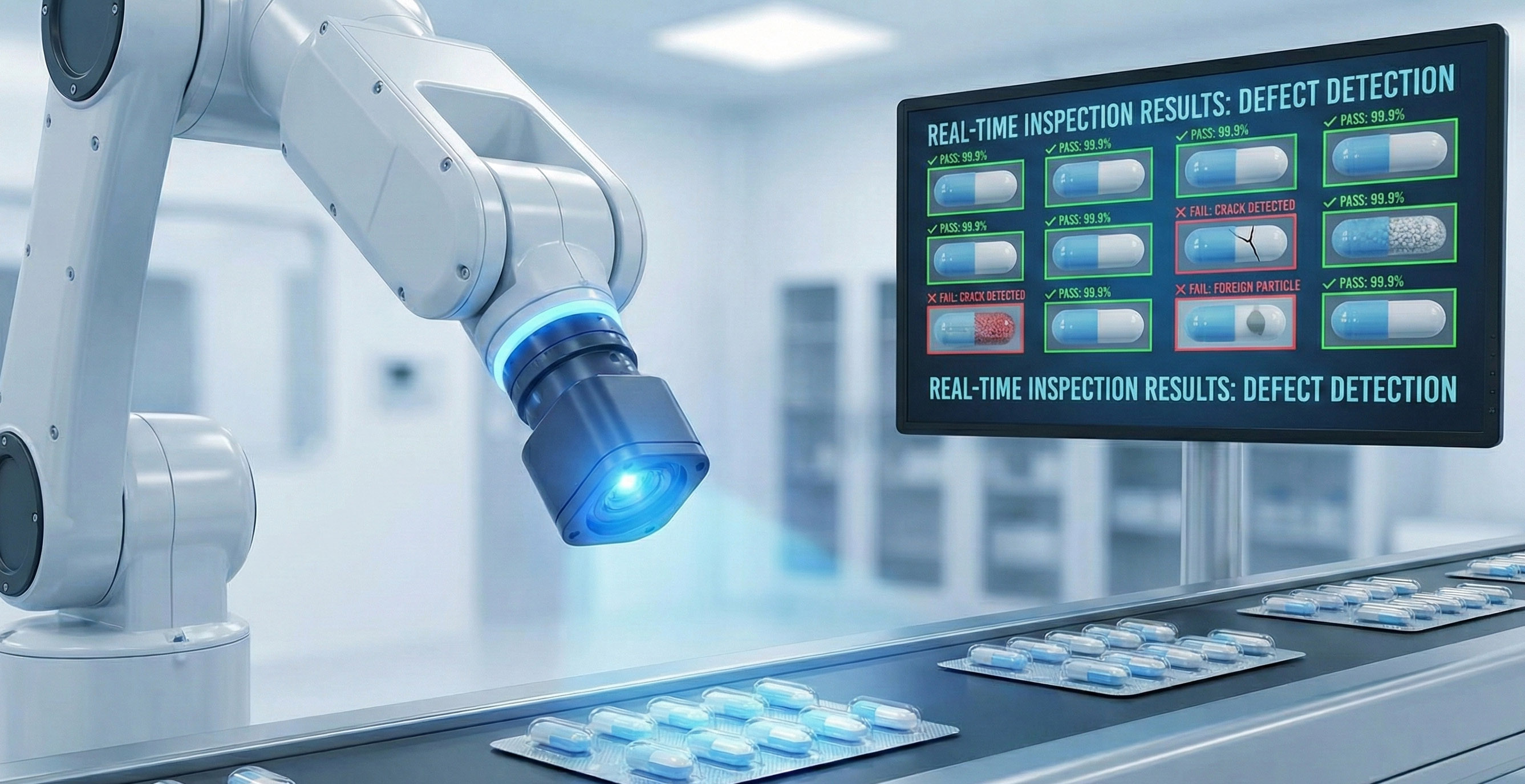
Drug product inspection presents unique challenges: defects must be detected with extremely high accuracy, false rejection rates must be minimized (every rejected unit is lost revenue), and inspection systems must operate at production speeds while maintaining sensitivity to subtle defects like particles, cracks, or cosmetic imperfections.
Deep Learning for Drug Inspection
Global pharmaceutical manufacturers are building AI/ML platforms for drug product inspection that represent the cutting edge of pharmaceutical quality AI. These systems ingest and harmonize product genealogy, process data, and quality data from various manufacturing systems, combining it with real-time data streams from inspection machines. Using deep learning models, the systems classify defect images with greater accuracy than traditional rule-based inspection systems.
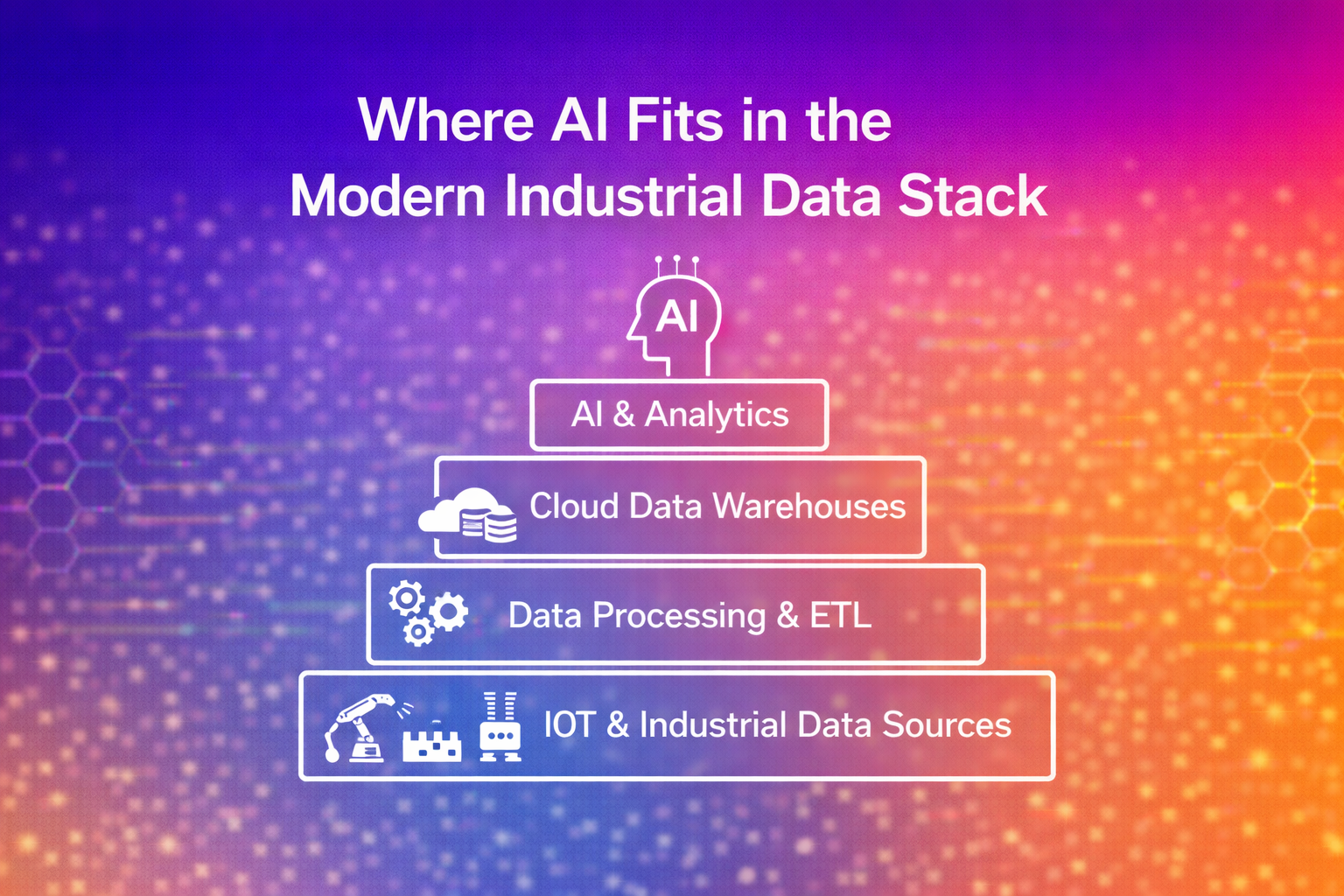
What makes these implementations notable is the data architecture: cloud-based data transformation and analytics infrastructure creates a unified view across manufacturing systems. The deep learning models aren't just improving inspection accuracy, they're generating insights about defect patterns that feed back into process improvement.
Intelligent Quality Data Analysis
Beyond visual inspection, AI is transforming how pharma and chemical companies analyze quality data to identify root causes, predict quality outcomes, and optimize processes proactively.
Leading manufacturers have applied industrial AI to enhance their chemical production processes. By leveraging IoT solutions for real-time monitoring combined with advanced data analytics, they are achieving significant improvements in process efficiency and product consistency. In color production, for example, where batch-to-batch consistency is critical for customer satisfaction, AI-driven analytics help identify the process parameters that most influence final product quality.
Safety-Critical Quality Monitoring
AI-Powered Leak Detection for Safety
Leading chemical manufacturers are implementing AI and IoT solutions for detecting possible containment leaks within production environments. Using video analytics and machine learning, these systems monitor for visual indicators of leaks in real-time. In chemical manufacturing, where containment integrity is both a safety and quality concern, this kind of continuous AI monitoring represents a step-change from periodic manual inspections.
These systems are designed with the goal of zero safety-related incidents in mind. By detecting potential leaks early, before they become safety incidents or environmental releases, AI monitoring serves both quality assurance and environmental health and safety objectives.
Process Analytical Technology (PAT) and Real-Time Optimization
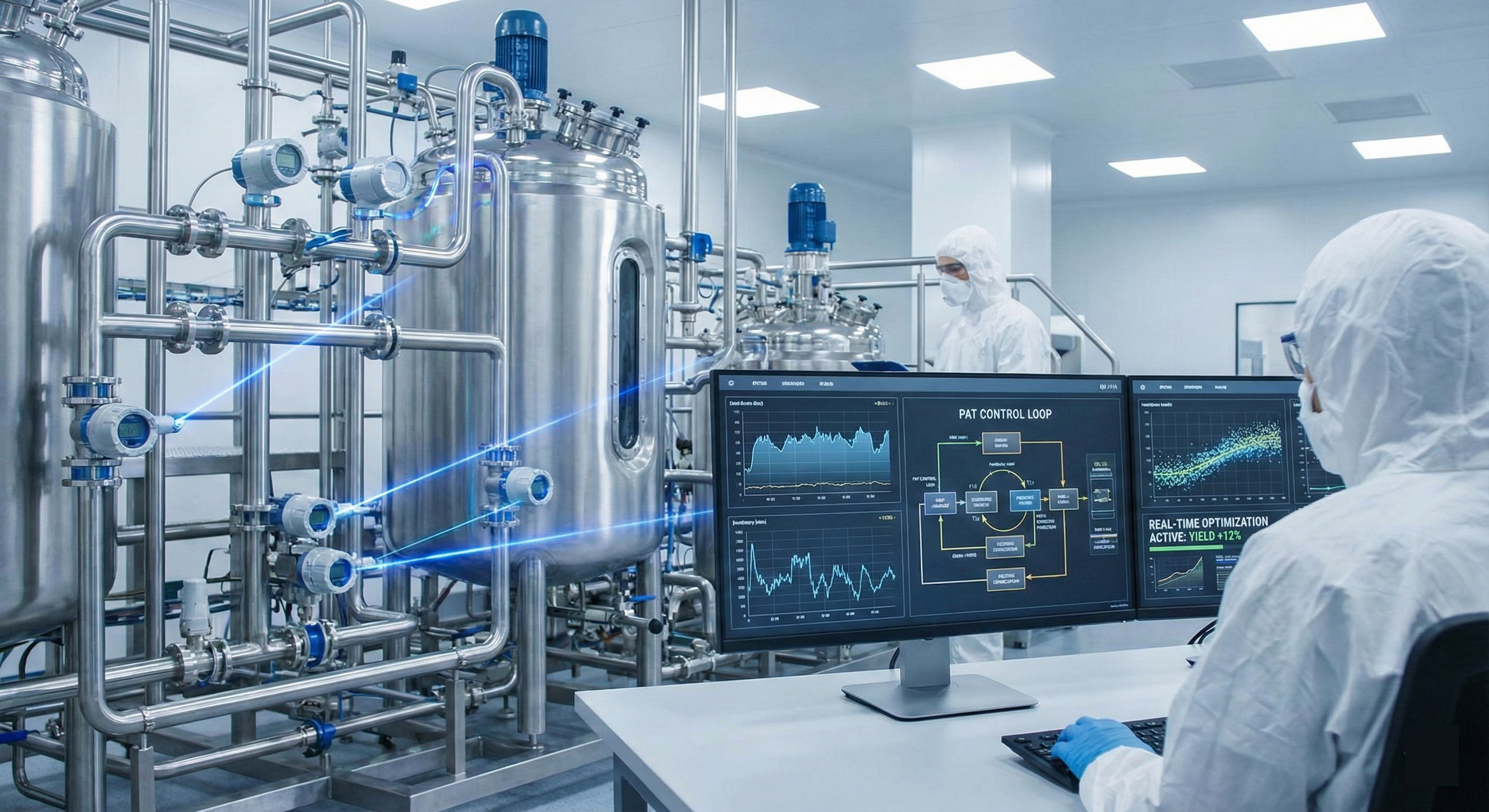
Process Analytical Technology, the FDA's framework for designing, analyzing, and controlling manufacturing through timely measurements, has been transformed by AI. What began as a regulatory push for better process understanding has evolved into a platform for AI-driven real-time optimization. The convergence of PAT sensors, advanced analytics, and machine learning is enabling levels of process control that weren't possible a decade ago.
Autonomous Process Control
The most advanced PAT implementations have moved beyond monitoring and advisory systems to true autonomous control, AI systems that directly manipulate process setpoints to optimize operations in real-time.
Reinforcement Learning for Chemical Plant Control
Chemical manufacturers are implementing what may be the most advanced examples of autonomous AI control in process industries. Reinforcement learning-based AI systems for autonomously controlling processes at chemical plants.
This is genuine autonomous control, not advisory. The AI systems adjust process setpoints directly, optimizing for productivity and energy efficiency while maintaining safe operating envelopes. The year-long continuous operations demonstrate that reinforcement learning can handle the complexity and variability of real chemical plant operations, a significant milestone for the industry.
AI Control for Industrial Gas Plants
Industrial gas producers are deploying AI-based plant control systems to enhance efficiency and reduce energy consumption across their facilities. These systems, also based on reinforcement learning, optimize plant operations by continuously learning from process data and adjusting control parameters. The results include significant improvements in energy efficiency, a critical factor in energy-intensive gas separation processes, while minimizing the tuning effort typically required for complex control systems.
Batch Process Optimization
Batch manufacturing, common in specialty chemicals, pharmaceuticals, and fine chemicals, presents unique optimization challenges. Each batch is an independent event, making it harder to apply continuous optimization techniques. AI is enabling new approaches to batch optimization that leverage historical batch data to guide real-time decisions.
AI-Optimized Batch Operations
Major petrochemical producers are deploying AI solutions to optimize batch operations and quality. These implementations track materials from reactors and extruders through blending to finished goods, monitoring against "Golden Batch Profiles", the optimal process trajectories derived from historical best-performing batches. The AI systems validate material selection, automate reporting, and alert operators when current batches deviate from optimal profiles.
The result is improved operational efficiency, better visibility into plant processes, and more consistent product quality. For pharmaceutical companies subject to 21 CFR Part 11 and other data integrity regulations, this kind of automated batch tracking and documentation also supports compliance objectives.
Industrial AI for Regulatory Compliance
Pharmaceutical and chemical companies operate in heavily regulated environments. FDA, EMA, EPA, OSHA, and dozens of other agencies impose requirements on everything from data integrity to environmental reporting to workplace safety. AI is emerging as a tool not just for improving operations, but for managing the compliance burden itself.
Document Management and Data Integrity
Pharmaceutical Data Redaction with AI
Global pharmaceutical companies face a common but critical challenge: securely sharing documents containing confidential information with external parties, partners, regulators, contract manufacturers, while protecting sensitive data. The traditional approach of manual redaction is time-consuming, error-prone, and doesn't scale.
AI solutions combine optical character recognition to identify text, natural language processing to understand context and identify sensitive information, and rule-based automation to apply appropriate redactions. These systems generate document summaries while automatically protecting confidential information. This approach dramatically reduces the time required for document preparation while improving consistency and reducing the risk of inadvertent disclosure.
GenAI for Document Analysis
Chemical manufacturers are using generative AI to transform document-intensive processes. With AI copilots and large language models, companies have automated meeting documentation and action item tracking, tasks that previously took hours now complete in minutes. More significantly, internal generative AI systems analyze complex technical and regulatory documents, extracting key information and supporting faster decision-making.
For chemical companies managing thousands of safety data sheets, regulatory submissions, and technical specifications, GenAI-powered document analysis represents a significant productivity opportunity.
GenAI-Powered SOP Assistance
AI Co-Pilot for Capsule Manufacturing
Pharmaceutical equipment and packaging manufacturers are deploying AI-driven SOP-interfacing co-pilots at manufacturing facilities. These systems are trained on hundreds of quality, manufacturing, and printing standard operating procedures, along with maintenance instructions and case sheets.
Operators can query the co-pilot through web, mobile, or voice interfaces to get immediate guidance on procedures, troubleshooting, and quality requirements. The system enhances productivity by reducing time spent searching through documentation, and reduces defects by ensuring operators have immediate access to correct procedures. In a GMP environment where deviation from SOPs can trigger investigations and regulatory concerns, this kind of instant procedural guidance has both operational and compliance value.
Cybersecurity for Regulated Industries
Cybersecurity has become a compliance requirement in pharma and chemicals. FDA guidance on cybersecurity for medical devices, increasing regulatory attention to supply chain security, and the growing threat of ransomware attacks targeting manufacturing operations have made AI-powered security essential infrastructure.
AI-Powered Threat Detection in Pharma and Chemicals
Both pharmaceutical and chemical manufacturers are deploying AI-powered network detection and response solutions to protect intellectual property, ensure operational continuity, and meet regulatory expectations for cybersecurity. Using unsupervised machine learning, these systems establish baseline behavior for network traffic, including the specialized industrial protocols common in manufacturing environments, and detect anomalies that may indicate threats.
AI-driven monitoring across network metadata, logs, and cloud events provides real-time detection of hidden threats and suspicious behaviors across the enterprise. For companies managing sensitive formulations and process IP, this kind of continuous AI-powered monitoring has become essential.
Industrial AI in Pharma & Chemical R&D
While this article focuses on manufacturing applications, it's worth noting that AI is also transforming R&D in these industries — and those applications have downstream manufacturing implications.
AI-Accelerated Drug Discovery
Pharmaceutical companies are integrating AI into drug discovery processes, creating "lab in a loop" systems. Data from experiments feeds AI models that enhance predictions and generate new molecular candidates. The iterative process accelerates drug discovery, with applications including personalized cancer vaccines and therapeutic optimization. For manufacturing, these AI-discovered molecules may have different production requirements than traditionally discovered compounds, a factor that manufacturing organizations need to prepare for.
AI-Assisted Materials Discovery
Chemical manufacturers are combining decades of chemistry expertise with AI and machine learning to accelerate product discovery and development. By training models on historical experimental data, companies can predict material properties and identify promising candidates faster than traditional experimental approaches. This digital transformation spans research through manufacturing, creating a connected innovation pipeline.
Conclusion
Pharmaceutical and chemical manufacturing may seem like challenging environments for AI adoption, heavily regulated, risk-averse, and operating critical processes where failures have serious consequences. Yet leading companies in this sector are demonstrating that AI is not only possible in these environments but is delivering substantial value.
The key is matching AI applications to the specific challenges and constraints of regulated manufacturing. Reinforcement learning for autonomous process control addresses the complexity of chemical operations. Deep learning for visual inspection addresses the accuracy requirements of pharmaceutical quality. Generative AI for document analysis addresses the compliance burden of regulated industries.
Get the newsletter
Industrial data & AI architecture guides, implementation tutorials and use-case blueprints, delivered as they’re published.
More articles
All articles →

The leading IIoT & AI educational platform for digital manufacturing teams