
7 Key Data Sources for Industrial AI


Every industrial AI implementation begins with a fundamental question: what data will train and feed the models? The answer determines not just technical architecture but project feasibility. Organizations with the right data foundations can move quickly; those without, face months of data infrastructure work before AI becomes possible.
This article maps the industrial AI data landscape: the seven primary data sources, how they map to use cases, the integration challenges organizations face, and the emerging role of synthetic data in overcoming data limitations.
1. Sensor and IIoT Data
Real-time streams from equipment sensors, temperature, pressure, vibration, flow rates, power consumption, and hundreds of other parameters captured at millisecond to minute intervals.
Primary use cases: Predictive maintenance (detecting anomalies before failures), process optimization (correlating parameters with outcomes), energy management (tracking consumption patterns).
Key considerations: Volume can be enormous (terabytes per day from a single plant). Edge processing is often necessary for real-time applications. Data quality varies widely, sensor data quality assessment partnerships specifically address this before feeding AI/ML applications.
2. Camera and Vision Data
Images and video streams from cameras, production line cameras, inspection systems, security cameras, drone footage, thermal imaging.
Primary use cases: Quality inspection (defect detection), safety monitoring (PPE compliance, zone violations), robot guidance (pick-and-place, navigation), security surveillance.
Key considerations: Lighting consistency critical for quality. Storage requirements are massive for video. Edge processing essential for real-time applications. Defective examples are often rare, synthetic data increasingly used to augment training sets.
3. Process and Production Data
Operational data from MES, SCADA, historians, production counts, cycle times, recipe parameters, batch records, OEE metrics, alarm logs.
Primary use cases: Production optimization, predictive quality (correlating process parameters with outcomes), bottleneck identification, OEE improvement.
Key considerations: Often fragmented across legacy systems. Contextualization required, raw data points meaningless without understanding what they represent. Time-series alignment is challenging when systems use different timestamps.
4. Quality and Inspection Data
Quality test results, inspection records, defect logs, SPC data, customer complaints, warranty claims, lab measurements.
Primary use cases: Predictive quality (predicting defects from process data), root cause analysis, inspection automation, quality trend analysis.
Key considerations: Historical quality data is gold, years of defect patterns enable AI to learn what human inspectors might miss. But data must be labeled accurately; garbage in, garbage out applies doubly to quality prediction.
5. Service and Maintenance Records
Work orders, service reports, maintenance logs, failure records, repair histories, parts replacement data, technician notes.
Primary use cases: Predictive maintenance (learning failure patterns), service optimization (dispatching, parts planning), knowledge management (capturing technician expertise).
Key considerations: Often unstructured (technician notes, free-text descriptions). Requires NLP or manual labeling to extract value. Historical depth matters, models need failure examples to learn from, but well-maintained equipment has few failures to learn from.
6. Documents and Unstructured Text
SOPs, manuals, technical documentation, reports, emails, meeting notes, regulatory filings, contracts.
Primary use cases: Knowledge assistants (answering operator questions), document automation, compliance checking, training support.
Key considerations: This is GenAI's domain. Document quality varies widely. Version control matters, training on outdated SOPs creates risk. Multilingual operations add complexity.
7. External and Supply Chain Data
Market data, weather, traffic, supplier information, logistics tracking, demand signals, commodity prices, regulatory updates.
Primary use cases: Demand forecasting, supply chain optimization, logistics planning, energy trading, risk management.
Key considerations: Data quality outside your control. API reliability matters. Cost can be significant for premium data feeds. Integration complexity when combining external with internal data.
The Data Integration Challenge
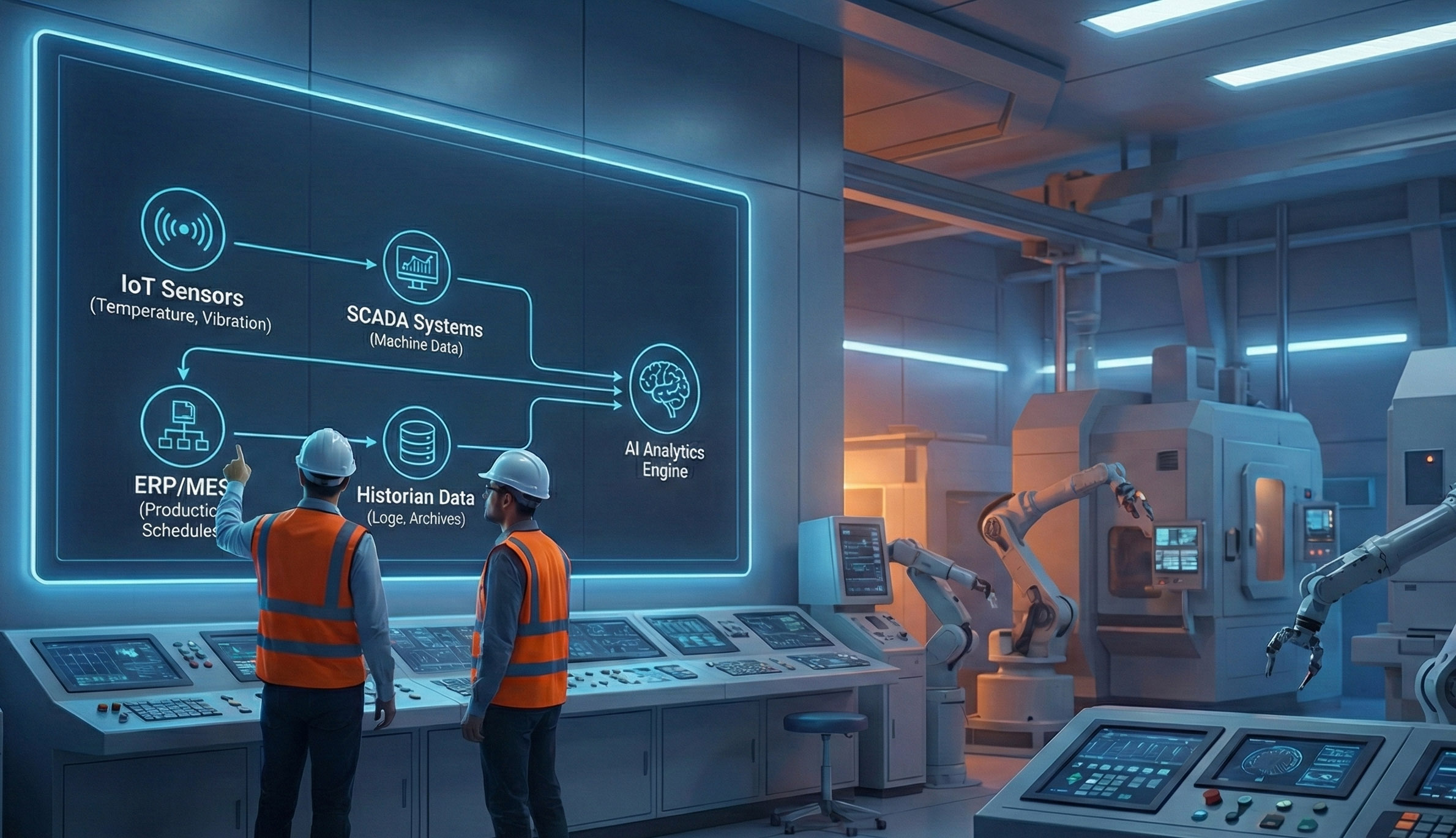
Most industrial AI implementations don't use a single data source, they integrate multiple sources to create complete pictures. This integration is often the hardest part of industrial AI projects.
Multi-Source Integration Examples
Pharmaceutical manufacturers: Harmonize product genealogy + process data + quality measurements + real-time inspection data using cloud data transformation services
Consumer goods manufacturers: Consolidate fragmented operational data into a single system of record using industrial platforms before AI could deliver value
Paper manufacturers: AI reliability platforms analyze data from various sources to predict
Common Integration Patterns
Unified data platforms: Organizations build data-first platforms that contextualize plant data before AI consumption
Cloud data lakes: Major cloud platforms provide storage and transformation services for harmonizing disparate sources
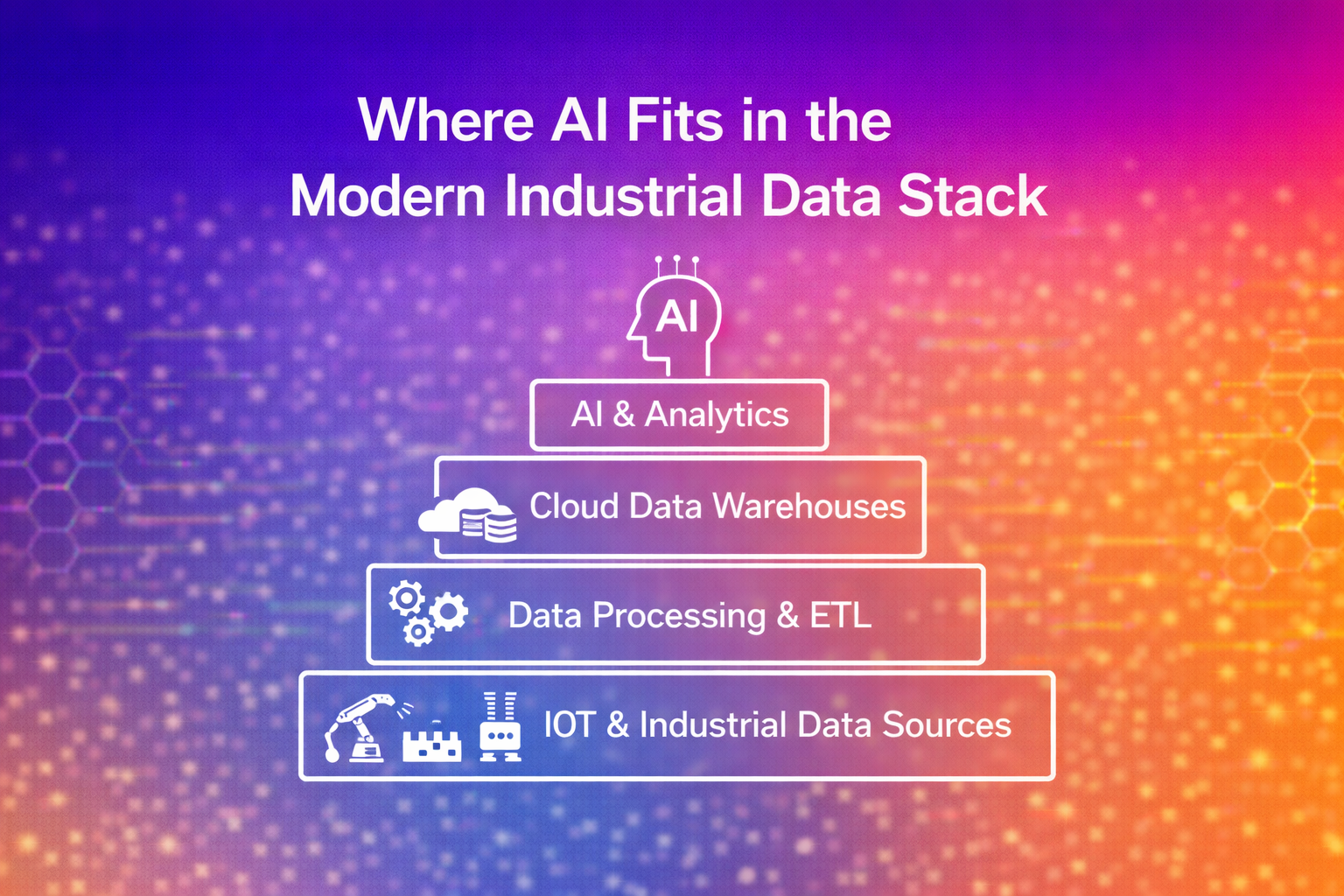
Edge-to-cloud architectures: Real-time processing at the edge with aggregation in the cloud for training and analytics
Conclusion
Industrial AI is only as good as the data feeding it. Sensor data enables predictive maintenance, vision data enables inspection automation, service records enable failure prediction, documents enable knowledge assistants.
But the most successful implementations don't rely on single data sources, they integrate multiple streams into unified platforms that create complete operational pictures.
For manufacturing leaders planning AI initiatives, the data strategy comes first. Identify which data sources your target use cases require. Assess what you have and what you're missing. Invest in data infrastructure before model development.
Get the newsletter
Industrial data & AI architecture guides, implementation tutorials and use-case blueprints, delivered as they’re published.
More articles
All articles →

The leading IIoT & AI educational platform for digital manufacturing teams